Rightmove Listing Review Checklist: 10 Things Sellers Should Check
- Insights by Rob Lapthorn
- 1.4k Views
- 0 Comments
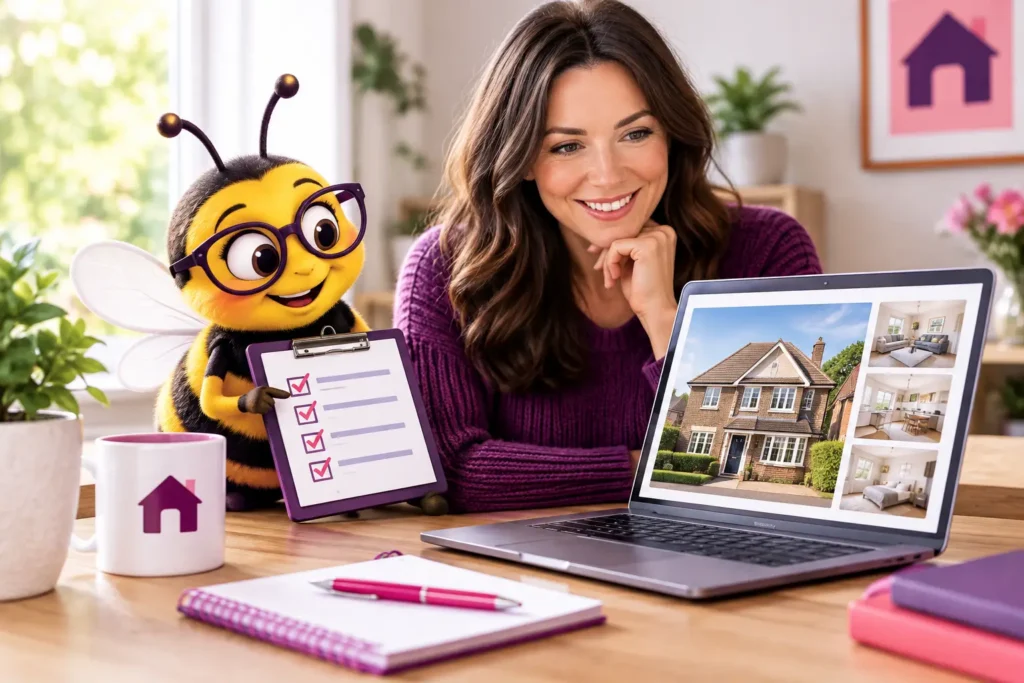
Your Rightmove advert has only a few seconds to earn a buyer’s attention.
They may be comparing several homes during a lunch break, between school runs or while scrolling on the sofa in the evening. If your property does not make sense quickly, there is always another listing one swipe away.
That is why a proper Rightmove listing review checklist can be useful, particularly when a home has been on the market for a few weeks and enquiries have started to slow.
A listing does not need gimmicks. It needs to be accurate, attractive and easy for the right buyer to understand.
And if viewings are quieter than expected, the answer is not automatically a price reduction. Sometimes the issue is the main photograph, the image order, an unclear floorplan or simply that the property’s strongest feature has been buried halfway down the advert.
Review Your Rightmove Listing Like a Buyer
Before changing anything, open your advert on both a phone and a desktop.
Then search Rightmove as though you were genuinely looking for a home like yours.
Use the same:
- Location
- Price range
- Bedroom requirement
- Property type
- Search radius
Now look at the homes appearing beside yours.
Which properties catch your eye first?
Which look easiest to understand?
Which feel like the strongest value?
This exercise can be uncomfortable because sellers naturally know everything that is good about their own home. Buyers only know what the listing shows them.
The aim is not to copy another property. It is to understand how yours competes for attention.
Rightmove’s own guide to marketing a property for sale highlights photography, floorplans, video and clear property information as important parts of an effective listing.
1. Check the Asking Price and Search Bracket
Price determines which buyers see the property before the marketing has even had a chance to work.
A buyer searching up to £500,000 will not normally see a home listed at £510,000.
That does not mean every property should be squeezed below the nearest round number. It means the asking price should be considered alongside the portal brackets buyers are actually using.
Ask:
- Which search ranges include the property?
- Which similar homes appear alongside it?
- Have stronger competing properties launched since yours?
- Have nearby properties reduced?
- Is the current price still supported by buyer feedback?
You can check completed sales through the official HM Land Registry sold price search, but sold prices still need interpretation.
A nearby property may have had a larger plot, better parking, different condition or a completely different buyer appeal.
Our guide to pricing your home properly explains why asking price, market value and launch strategy are not always the same thing.
2. Look at the Main Photograph
The lead image is probably the most important individual piece of the listing.
Before a buyer opens the advert, it is competing against every other main image on the results page.
Traditionally, agents often defaulted to the front elevation.
Sometimes that is absolutely the right choice.
But not always.
If your home has:
- An exceptional kitchen
- A brilliant garden
- A beautiful open-plan extension
- An impressive view
- A particularly attractive character room
one of those may be a stronger opening image.
The question should be:
Which photograph gives the right buyer the strongest reason to click?
At Property Bee, we choose the hero image based on the individual property rather than automatically making photograph number one the front of the house.
3. Review Every Photograph
Once the buyer clicks, the rest of the photography needs to maintain their interest.
Good property photographs should feel bright, natural and accurate.
Check for:
- Closed curtains or blinds
- Dark rooms
- Cluttered surfaces
- Cars dominating exterior shots
- Bins in the garden
- Beds left untidy
- Too many personal items
- Distracting cables
- Several almost identical photographs
More images do not automatically create a stronger listing.
Buyers need enough photographs to understand the home, not seven different angles of the same sofa.
Our guide to property photography for a house sale explains how we approach image selection and presentation.
If the home was not properly prepared before the original photographs were taken, it may also be worth revisiting the preparation itself. Our Property Bee staging guide gives sellers a practical room-by-room checklist.
4. Check the Order of the Images
Image order is easy to overlook.
The gallery should help buyers understand the property rather than jump randomly between a bedroom, garden, kitchen and downstairs toilet.
There is no rigid formula, but a sensible sequence might move through:
- The strongest opening image
- Exterior or main living space
- Kitchen and dining areas
- Living rooms
- Bedrooms
- Bathrooms
- Garden and outside space
- Garage, office or other useful features
- Wider setting or drone images where relevant
The strongest features should not be hidden at photograph 24.
Buyers may never get that far.
5. Make Sure the Floorplan Is Doing Its Job
A floorplan is one of the most practical parts of an online listing.
Rightmove itself describes a floorplan as critically important because buyers use it to understand whether the layout and flow could suit them.
Check:
- Are room labels correct?
- Are dimensions clear?
- Are doors shown properly?
- Are extensions included?
- Is a converted garage labelled accurately?
- Can the plan actually be read on a mobile screen?
If significant alterations have been made since an older floorplan was produced, the marketing plan should reflect the property as it exists now.
The photographs create interest.
The floorplan often tells the buyer whether the home could actually work.
6. Read the Description Without the Estate-Agent Language
Try reading the description as though you have never seen the home.
Does it actually tell you anything useful?
Phrases such as:
> “Stunning family home”
or:
> “Viewing highly recommended”
are harmless enough, but they do not explain why somebody should choose that particular property.
Useful descriptions are specific.
They might mention:
- An extended kitchen/diner
- A separate home office
- Driveway parking
- An en-suite
- A utility room
- A private rear garden
- Flexible bedroom accommodation
- Useful storage
- Nearby green space
- Practical transport links
The aim is not to cram every feature into the first paragraph.
It is to make the home’s strongest qualities obvious quickly.
Our broader guide to the best way to market a property properly looks at how descriptions, photography, video and pricing should work together.
7. Check the Property Information
A polished advert loses credibility quickly if the basic facts are wrong.
Review details such as:
- Bedroom count
- Property type
- Tenure
- Council tax band
- Parking arrangements
- Lease information where relevant
- Floor area where stated
- Important charges attached to the property
If something is uncertain, establish the facts rather than guessing.
Leasehold sellers in particular should make sure important information is clear. Our guide to selling leasehold property covers lease terms, service charges and management information in more detail.
You should also make sure the property has a valid Energy Performance Certificate where required. Sellers can check existing certificates through the official GOV.UK EPC service.
Accurate information may occasionally cause an unsuitable buyer to decide not to view.
That is not necessarily a failure.
A useful viewing from somebody who understands the property is worth considerably more than an appointment that was never going anywhere.
8. Check the Map and Location Information
It sounds basic, but check where the property appears on the map.
If the pin is wrong, buyers may form the wrong impression before they have even spoken to the agent.
Location wording should also be useful and accurate.
Depending on the property, buyers might genuinely care about:
- A nearby station
- Green space
- Schools
- Shops
- Main road access
- A town or village centre
- Woodland
- Parks
Avoid vague claims that cannot be supported.
A buyer can check journey times and locations in seconds.
Local context should help their research, not try to outsmart it.
9. Ask Whether Video or Drone Would Add Something
Not every home needs drone footage or an elaborate property film.
But some properties are much easier to understand through video.
A proper video tour can show:
- How rooms connect
- The flow through an extension
- Open-plan living spaces
- The relationship between the house and garden
- Character details
- The overall atmosphere of the property
At Property Bee, suitable properties are genuinely filmed and professionally edited. We do not simply turn the still photographs into a slideshow and call it a video tour.
Drone photography can also be useful where it demonstrates something ordinary photography cannot, such as a large plot, nearby countryside or an unusual setting.
Our guide to whether video tours help sell homes explains where these tools can add genuine value.
The important question is not:
Can we add more marketing?
It is:
Would this help buyers understand why this home is worth viewing?
10. Review the Results, Not Just the Advert
A listing can look brilliant and still need adjusting.
Once the property is live, the response provides useful evidence.
Look at:
- Online views
- Enquiries
- Viewing requests
- Completed viewings
- Second viewings
- Viewer feedback
- Offers
Different patterns can point towards different issues.
Plenty of online views but few enquiries
Buyers are finding the listing, but something is stopping them taking the next step.
That may be price, presentation, the floorplan or how the home compares with its competition.
Plenty of enquiries but few viewings
There may be an issue with viewing availability, buyer qualification or information being provided after the initial enquiry.
Plenty of viewings but no offers
The online marketing is generating appointments, but buyers are seeing something differently once they arrive.
That might involve condition, location, layout or value.
Our guide to getting more property viewings looks at these patterns in more detail.
Do Not Treat Portal Views as the Only Measure of Success
A big Rightmove view count can feel reassuring.
But views alone do not sell the property.
A listing that receives thousands of clicks without creating serious conversations may actually be telling you something important.
Likewise, a more specialist property may receive fewer views but attract exactly the right audience.
The quality of the response matters alongside the quantity.
At Property Bee, we look at online activity together with enquiries, viewing feedback and actual buyer conversations.
The goal is not simply to produce an impressive portal statistic.
It is to find the right buyer.
When Should You Change a Rightmove Listing?
Do not change things simply because one weekend was quiet.
But do not leave a listing untouched for months when the evidence is consistently telling you something is wrong.
Useful changes might include:
- Choosing a stronger lead image
- Reordering photographs
- Improving the description
- Adding missing information
- Refreshing photography
- Adding video where useful
- Improving presentation
- Reviewing the asking price
If the issue is price, make the change for a reason.
A token reduction that keeps the property in exactly the same buyer search bracket may achieve very little.
Our guide to what to do when your house is not selling explains how to distinguish between a marketing issue and a wider pricing problem.
A Rightmove Listing Should Never Be Left to Drift
Uploading a property is the beginning of the marketing process, not the end.
A good estate agent should know:
- How buyers are responding
- What feedback is being received
- Which competing homes have appeared
- Whether registered buyers have been contacted
- What should happen next
At Property Bee, we specialise in standout property marketing across Surrey, Hampshire and Berkshire, combining professional photography, genuinely filmed video tours, accurate floorplans and direct buyer matching with regular review once the property is live.
You can see examples of how we market real homes in the Property Bee Showcase.
And if your current listing feels as though it has lost momentum, contact Property Bee for a straightforward second opinion on the price, presentation and marketing.

Have your say
You must be logged in to post a comment.